Lithium vs Lead-Acid for E-Rickshaws: The Real Cost of Ownership
Lead-acid batteries look cheaper upfront, but lithium wins decisively on lifespan, range and daily earnings. Here's the math every e-rickshaw owner should see.
For an e-rickshaw driver, the battery is the single most important investment after the vehicle itself. The choice between a traditional lead-acid pack and a modern lithium (LiFePO4 / LFP) pack determines daily range, charging downtime, and ultimately how much money the driver takes home each month.
Lead-acid batteries carry a lower sticker price, which is why many first-time buyers choose them. But they typically last only 12–18 months, lose capacity quickly in Indian heat, and require 8–10 hours to fully charge. That charging time is income lost — every hour on the charger is an hour the rickshaw is not earning.
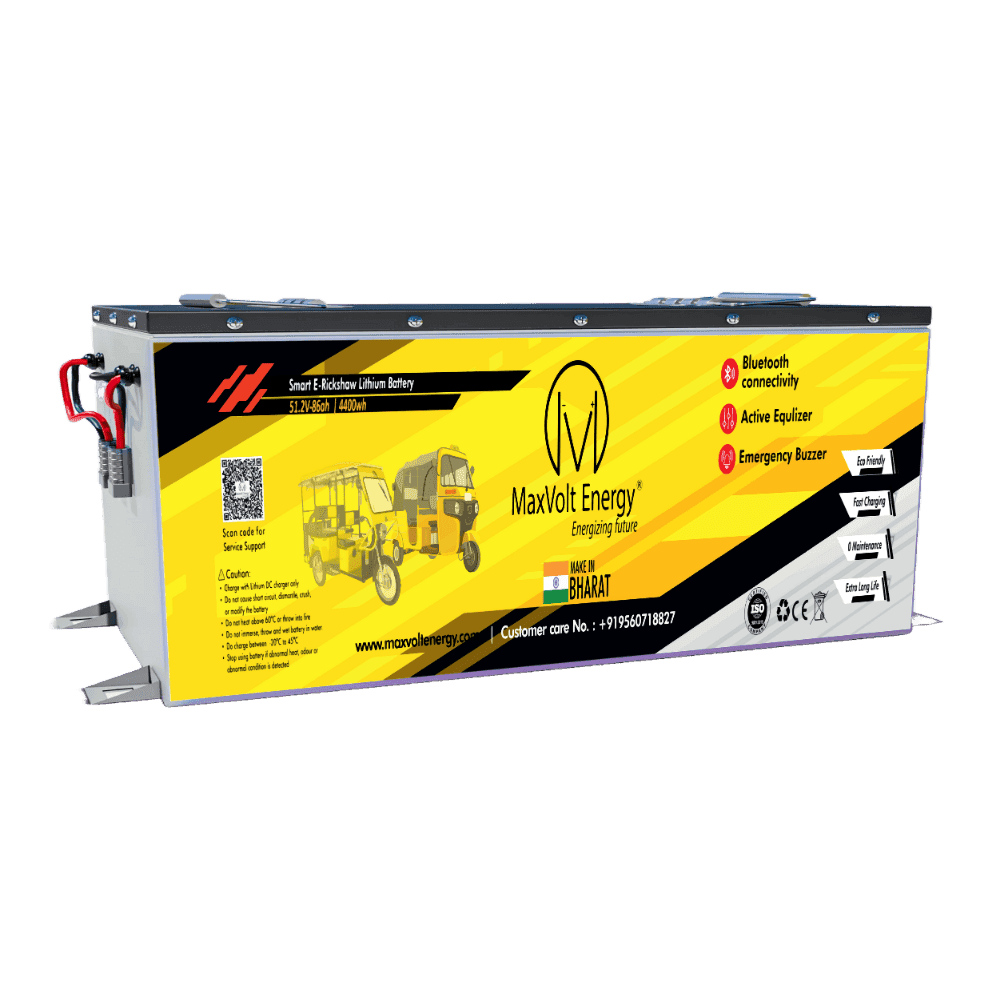
Maxvolt's LiFePO4 e-rickshaw packs are built for a very different economics. With a usable life of several years and thousands of charge cycles, a single lithium pack often outlasts three or four lead-acid replacements. Fast charging means the vehicle is back on the road in a fraction of the time, and a smart Battery Management System (BMS) protects against overcharge, deep discharge and thermal stress.
When you add up replacement frequency, charging downtime, and maintenance, lithium delivers a dramatically lower total cost of ownership despite the higher upfront price. For a working driver, that translates directly into more trips, more range per charge, and more rupees earned every single day.
If you are switching from lead-acid, look at three numbers: voltage (Maxvolt e-rickshaw packs are 51.2V), capacity (86Ah–200Ah depending on your daily distance), and warranty. Match the capacity to your route, and the pack will pay for itself well before it needs replacing.